Sports injuries don’t just happen to elite athletes. Whether you are playing rugby league in the Moreton Bay competition, logging distance along the Scarborough foreshore, lifting heavily in the gym, or competing in netball, football, or martial arts, an unexpected injury instantly stalls your momentum.
When an injury occurs – whether sudden, like an ankle sprain or hamstring tear, or gradual, like Achilles tendinopathy – the immediate questions are always the same:
- What did I actually injure?
- How long will I be out of action?
- What can I safely continue doing right now?
- How do I make sure this doesn’t happen again the moment I return?
At Scarborough Physio & Health, our goal is not simply to rub a sore muscle or get you feeling slightly looser on the treatment table. Successful sports-injury management requires bridging the gap between acute hands-on symptom relief and progressive, real-world physical performance.
By pairing advanced Myotherapy techniques—such as targeted soft tissue release, dry needling, and joint mobilization—with athletic load management and progressive exercise rehabilitation, we help athletes transition from initial pain to long-term performance resilience.
Acute vs. Overuse Sports Injuries
Sports injuries generally fall into two distinct categories, each requiring a tailored clinical path:
1. Acute Mechanical Injuries
Occurring instantly through a sudden tackle, awkward landing, collision, or rapid direction change.
- Muscle Strains: Hamstring, calf, quadriceps, or groin tears.
- Joint & Ligament Sprains: Acute lateral ankle sprains, knee ligament sprains (ACL/MCL), or shoulder sprains.
- Contusions & Soft Tissue Trauma: Direct blunt impact resulting in deep muscle hematomas.
2. Overuse & Gradual-Onset Conditions
Developing over weeks or months when physical loading outpaces your body’s current structural tolerance.
- Tendinopathies: Achilles, patellar, rotator cuff, or gluteal tendon irritation.
- Running-Related Strain: Shin splints (medial tibial stress), plantar fasciopathy, or runner’s knee.
- Recurrent Muscular Tightness & Overload: Chronic upper-back strain, persistent groin tightness, or shoulder impingement patterns.
Acute Injury ➔ Protect & Calm Tissues ➔ Restore Basic Mobility ➔ Rebuild Capacity
Overuse Injury ➔ Identify Load Spikes ➔ Manage Tissue Sensitivity ➔ Progressive Strength
Why Sports Injury Treatment Is Not Just “Sports Massage”
While standard sports massage is excellent for general muscular relaxation, sports-injury rehabilitation requires a much higher level of clinical rigor.
Rubbing a hypertonic muscle might temporarily ease local soreness, but it does not restore missing tendon stiffness, rebuild lost muscle strength, or prepare a joint for high-speed deceleration.
What Is Myotherapy?
Myotherapy is an advanced branch of physical therapy dedicated to assessing, treating, and managing musculoskeletal pain, myofascial dysfunction, and sports injuries. Rooted in sports biomechanics, functional anatomy, and exercise science, Myotherapy blends effective hands-on therapy with structured exercise rehabilitation.
Modalities Used in Sports Injury Consultations:
- Advanced Soft Tissue Therapy & Remedial Massage: Reducing protective muscular guarding, breaking down restricted tissue, and improving blood flow.
- Targeted Dry Needling: Inactivating painful myofascial trigger points in hypertonic muscle groups to calm neurological pain signals.
- Stationary & Sliding Myofascial Cupping: Enhancing tissue glide, improving localized circulation, and easing myofascial restriction.
- Gentle Joint Mobilisation: Restoring natural joint glide in restricted ankles, knees, hips, or shoulders post-injury.
- Functional Movement Screening: Analyzing gait, landing mechanics, squat patterns, and sport-specific movements to spot compensations.
- Progressive Exercise Rehabilitation: Prescribing targeted strength, power, and movement control exercises to prepare tissues for athletic return.
How Myotherapy Accelerates Athletic Recovery
1. Calming Pain & Restoring Movement Windows
Hands-on treatment, dry needling, and joint mobilization provide vital sensory input that reduces tissue sensitivity and eases protective muscle guarding. This creates a pain-free window where active rehabilitation can safely begin.
2. Progressive Load Management & Training Structure
Most non-contact sports injuries stem from sudden spikes in training volume, intensity, or rapid changes in running speed. We help you map out your training loads—balancing exertion with recovery so your muscles, tendons, and joints adapt safely.
3. Rebuilding Sport-Specific Capacity
Pain relief is only step one. To return to high-level sport, tissues must be systematically loaded to tolerate:
- Maximal sprinting and high-speed running exposure
- Rapid deceleration and reactive change of direction
- Plyometric jumping, landing control, and force absorption
- Sport-specific wrestling, pressing, or contact preparation
My Approach at Scarborough Physio & Health
By John Preece — Remedial Massage Therapist | Myotherapist (Adv Dip) | Strength & Conditioning Coach
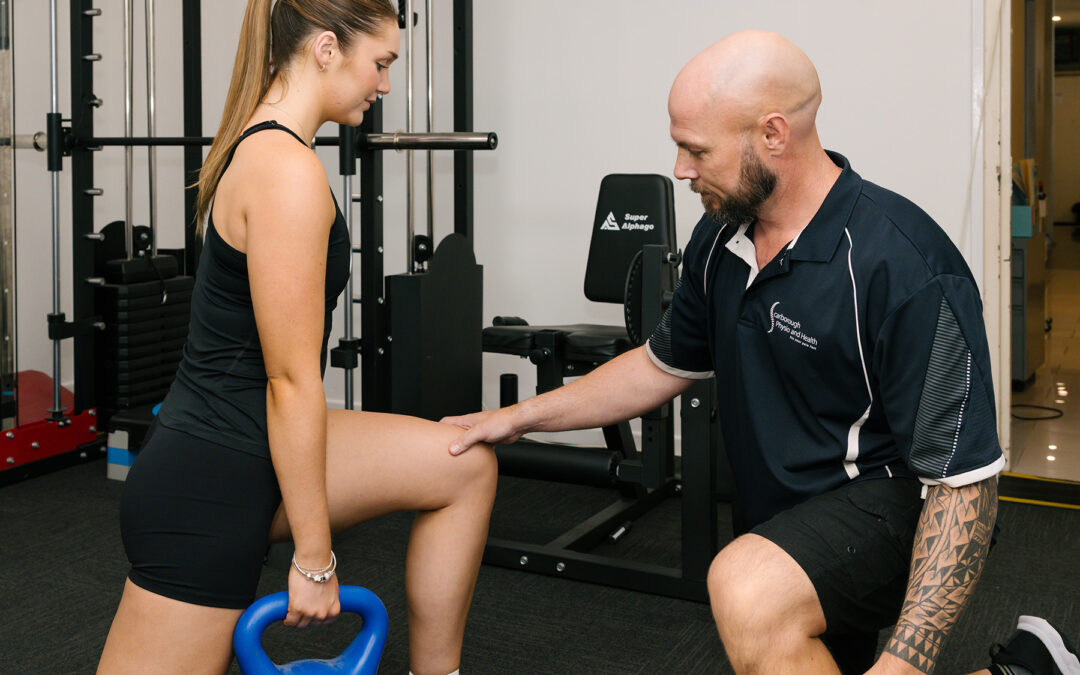
My background as a Strength & Conditioning Coach within the Redcliffe Dolphins pathway system directly shapes how I approach sports-injury rehabilitation.
When an athlete enters my clinic, I don’t just look at where it hurts on the treatment table. I evaluate the total physical demands of your sport, your specific position, your current training volume, and your physical strength deficits.
Hands-on therapy—such as Remedial Massage, dry needling, cupping, and joint mobilization—is an invaluable tool to reduce pain and calm hyper-sensitive tissues. But passive therapy is only one part of the equation.
I integrate athletic Strength & Conditioning principles into every rehabilitation plan. We move systematically from basic symptom management to targeted strength work, deceleration training, dynamic agility, and full training exposure. My goal is to ensure you return to your sport not just pain-free, but stronger, faster, and more resilient than before.
Red Flags: When Urgent Medical Assessment Is Required
While Myotherapy is highly effective for soft-tissue and mechanical sports injuries, certain presentations require immediate medical or emergency evaluation.
Seek immediate medical assessment if you experience:
- Inability to bear weight on a lower limb immediately post-injury.
- Obvious joint deformity, suspected bone fracture, or joint dislocation.
- Significant, rapid joint swelling immediately following a pop or snap sensation.
- Head impact resulting in suspected concussion, dizziness, memory loss, or confusion.
- Severe, unexplained muscular weakness, numbness, or loss of sensation.
Frequently Asked Questions
What to Expect at Your First Consultation
Stage 1: Thorough Assessment & Tissue Evaluation
The initial focus is understanding why your tissues are reacting and identifying your specific movement limitations.
What We Do: We review your athletic history, training logs, match schedules, and performance goals, performing comprehensive biomechanical testing of joint mobility, strength, landing mechanics, and functional capacity.
The Scarborough Physio Advantage: We take time to listen to your athletic story and explain your injury clearly in plain English, removing complex medical jargon so you understand your timeline and milestones.
Stage 2: Calibrated Clinical Treatment
Once we understand your presentation, targeted hands-on treatment is applied during your very first session to calm angry tissues and improve comfort.
What We Do: Advanced soft tissue therapy, remedial massage, dry needling, myofascial cupping, or gentle joint mobilisations are used based on your needs.
The Scarborough Physio Advantage: We avoid painful, aggressive force, focusing instead on precise manual techniques that ease protective muscle guarding without over-irritating acute athletic tissue.
Stage 3: Clear Post-Care Advice & Active Recovery Plan
Hands-on care creates a window of relief, which we lock in with practical self-management advice and movement guidance.
What We Do: We provide clear post-treatment expectations, athletic load management structures, and progressive exercise rehabilitation tailored to your sport.
The Scarborough Physio Advantage: You leave with a structured return-to-performance roadmap, moving systematically from basic strength work to deceleration training, agility, and full competition readiness.
Ready to Take the First Step Toward Peak Performance?
Don’t let a lingering hamstring strain, stubborn tendon pain, or recurrent joint stiffness sit between you and your athletic goals. Whether you are preparing for match day, training for a marathon, or wanting to move heavily in the gym without pain, our team is ready to get you back in the game.