Bridging the Gap Between Pain Relief and Full Performance
When most people hear the term Strength and Conditioning (S&C), they picture elite athletes lifting heavy barbells, executing explosive sprints, or preparing for high-level competition. While athletic development is certainly a key pillar, S&C principles are equally critical for everyday injury recovery and physical rehabilitation.
Passive therapies (such as targeted remedial massage, dry needling, or myofascial cupping) are exceptional at modulating pain, easing protective muscle guarding, and restoring immediate movement comfort. However, feeling better inside a treatment room does not mean your tissues are capacity-ready for the real-world physical demands of work, daily life, or sport.
At Scarborough Physio & Health, we utilise evidence-informed Strength and Conditioning principles to bridge the gap between initial clinical symptom relief and total physical resilience.
What Is Strength & Conditioning in Rehabilitation?
Strength and Conditioning in a clinical setting is the structured, progressive application of movement and exercise science to rebuild physical capacity, tissue tolerance, and movement confidence.
Rather than relying on generic exercise sheets, a clinically integrated S&C program systematically targets specific physical qualities:
- Maximal Muscle Strength: The foundation of force production required to lift, carry, and support joint structures.
- Rate of Force Development (Power): The ability to produce force rapidly, critical for balance recovery, dynamic movements, and deceleration.
- Muscular & Aerobic Endurance: Building systemic and local tissue stamina to tolerate repeated work without early fatigue.
- Tissue & Load Capacity: Rebuilding the mechanical tolerance of tendons, ligaments, cartilage, and bone.
- Neuromuscular Coordination & Agility: Restoring balance, proprioception, dynamic stability, and multi-directional movement confidence.
Passive Symptom Relief
Massage / Dry Needling
Movement Restoration
Progressive Resistance Loading
Dynamic & Task-Specific Conditioning
Full Return to Work, Daily Life, Gym, or Sport
Why Rest and Pain Relief Alone Are Not Enough
While short-term rest and hands-on clinical care can settle acute inflammation and calm hyper-sensitive pain pathways, prolonged rest alone is often counterproductive.
The Pitfalls of Complete Rest
- Deconditioning & Muscle Atrophy: Prolonged unloading rapidly decreases muscle cross-sectional area and peak force capacity.
- Reduced Tendon Stiffness: Tendons require mechanical load to maintain their structural integrity and spring-like energy storage.
- Loss of Neuromuscular Confidence: Avoiding movement reinforces fear-avoidance behaviours and lowers the central nervous system’s threshold for pain.
Pain-Free Does Not Mean “Ready”
Clinical research consistently demonstrates that persistent physical deficits (such as reduced maximal strength, asymmetrical power output, and impaired reactive speed) often remain long after acute pain has resolved. Stopping rehabilitation the moment pain disappears frequently leaves tissues underprepared, dramatically increasing the risk of re-injury upon returning to full activity.
The Core Principles of Clinical Exercise Progression
A successful rehabilitation program relies on proven exercise science principles adapted to your specific healing timeline:
S&C Across Different Rehabilitation Demands
Progressive loading principles apply to every individual, regardless of age or athletic background:
1. Active Older Adults & Healthy Ageing
For older individuals, S&C focuses on maintaining independence and preventing falls. Interventions prioritise sit-to-stand strength, loaded step-ups, single-leg balance, and rapid force development to ensure quick reaction times during slips or trips.
2. Manual Workers & Tradespeople
Occupational rehabilitation requires rebuilding physical capacity to withstand prolonged, asymmetrical loading. Programs incorporate heavy hip hinging, loaded carries, rotational trunk strength, and multi-planar endurance to match job site demands.
3. Persistent & Chronic Musculoskeletal Pain
In conditions like chronic low back pain or hip/knee osteoarthritis, progressive strength training alters pain perception, increases joint lubrication, and restores movement confidence without causing harmful tissue wear.
4. Tendon & Muscle Rehabilitation
Tendons (e.g. Achilles, patellar, rotator cuff) thrive under heavy, slow resistance loading. S&C progressions move systematically from isometric holds (for pain relief) to heavy isotonic strength, eccentric loading, and fast energy-storage/plyometric drills.
5. Post-Surgical & Return-to-Sport Athletic Reconditioning
For complex injuries (such as ACL reconstruction, hamstring strains, or ankle sprains), late-stage rehabilitation must move beyond basic gym exercises. It requires structured exposure to deceleration, high-speed running, sudden change of direction, and fatigue-resistant conditioning before full competitive clearance.
The Power of Combined Myotherapy and S&C Coaching
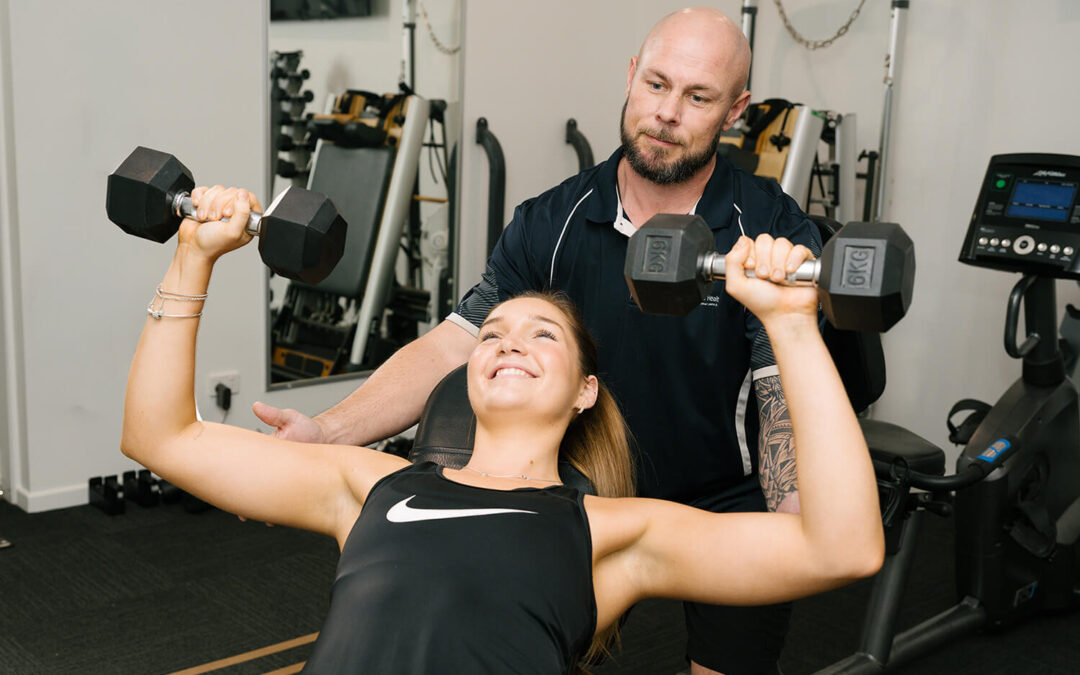
At Scarborough Physio & Health, John Preece brings a unique dual perspective as an Advanced Dip. Myotherapist and accredited Strength & Conditioning Coach.
By integrating hands-on soft tissue therapy directly with active reconditioning, we provide a complete, end-to-end recovery pathway:
- Hands-on Relief Opens the Window: Remedial massage, dry needling, and joint mobilisation clear acute stiffness and lower pain.
- Active Exercise Locks in the Gain: Immediate, targeted resistance training utilises that pain-free window to load tissues and build lasting physical capacity.
- Multidisciplinary Alignment: We work collaboratively alongside your General Practitioner, Sports Physician, or Physiotherapist to ensure your exercise plan follows all medical restrictions while driving meaningful functional progress.
Red Flags: When Exercise Requires Immediate Medical Review
While exercise is inherently safe and beneficial, certain warning signs require immediate medical clearance before continuing training:
- Sudden, severe joint swelling or joint instability/locking.
- Severe, unremitting night pain or unexplained weight loss.
- Progressive neurological changes, such as sudden leg weakness, numbness, or loss of bowel/bladder control.
- Signs of deep vein thrombosis (DVT), such as sudden calf warmth, redness, and severe swelling.
Frequently Asked Questions
What to Expect at Your First Consultation
Stage 1: Comprehensive Functional Assessment
The initial focus is evaluating your baseline physical capacity, force production, movement range, and current tissue tolerance levels.
What We Do: We perform targeted movement screening, strength asymmetry testing, and functional capacity testing tailored to your daily work or sport.
The Scarborough Physio Advantage: We take time to evaluate how your body produces and absorbs force in plain English, ensuring we identify the root structural drivers of your presentation.
Stage 2: Targeted Clinical Support & Loading
Once we establish your baseline, hands-on Myotherapy treatment is integrated with calibrated resistance exercises to settle pain and clear tissue restrictions.
What We Do: Remedial soft tissue release, dry needling, joint mobilisation, and isometric or heavy slow resistance loading are applied.
The Scarborough Physio Advantage: We utilise pain-free treatment windows created by hands-on therapy to immediately load tissues safely, avoiding unnecessary protective muscle guarding.
Stage 3: Structured Exercise Progression & Reconditioning
Hands-on care settles immediate discomfort, which we lock in with a stepped, progressive exercise roadmap tailored to long-term adaptation.
What We Do: We prescribe progressive strength, power, rate of force development, and dynamic agility exercises mapped out against objective recovery benchmarks.
The Scarborough Physio Advantage: You receive a structured reconditioning plan designed to build total tissue capacity and prevent re-injury when returning to full work, gym, or sport.
Ready to Rebuild Your Strength and Confidence?
Stop relying on short-term fixes alone. Take control of your recovery with an evidence-informed Strength and Conditioning plan tailored to your personal goals.