
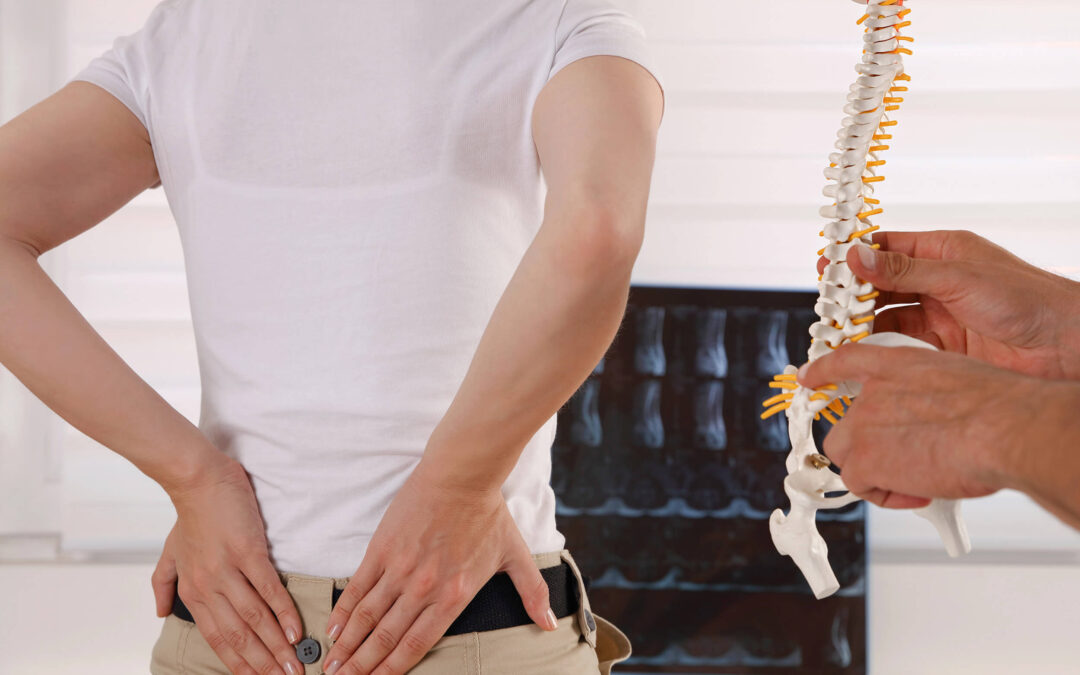
I get asked fairly often whether pinched nerve massage at our Redcliffe clinic can help with symptoms like sciatica, pins and needles, burning pain, or pain that seems to travel rather than stay in one spot.
The short answer is: sometimes, yes — but it depends what is actually driving it.
What People Mean by “Pinched Nerve”
The term “pinched nerve” is commonly used to describe symptoms such as tingling, numbness, burning pain, or symptoms that travel into the arm or leg. Some people may also describe this as a “trapped nerve,” particularly when symptoms involve tingling, numbness, or pain travelling into the arm or leg. In some cases this may involve irritation or sensitivity around a nerve-related structure, while in others the presentation may be more muscular, mechanical, or movement-related.
Not All “Nerve Pain” Is the Same
That is the important part. I do not look at every “nerve pain” presentation as the same thing. Some symptoms are more likely to involve local muscle guarding, movement restriction, or mechanical irritation around a nerve-sensitive area. Others are more consistent with true neuropathic pain or a condition that needs a different kind of assessment and management.
This is where people often get misled.
Many people searching for pinched nerve massage in Redcliffe are dealing with symptoms involving the neck, lower back, shoulder, or glute region. Someone may say they have nerve pain, but what they are really describing could be:
- referred pain from a musculoskeletal source
- irritation around a nerve-sensitive area
- compression-related symptoms such as sciatica-type leg pain
- a more true neuropathic pain presentation
- something that needs further medical investigation
That distinction matters, because remedial massage is not a direct treatment for every nerve-related condition. My job is to think clinically about what the pattern actually looks like, not just treat the label.
When Massage May Help For Nerve-Related Symptoms
Remedial massage may be useful when nerve-related symptoms are being influenced by surrounding soft tissue tension, guarding, or reduced movement.
In practical terms, that can be when:
a low back and glute presentation is contributing to sciatica-type symptoms
the neck and upper shoulder region is heavily loaded and symptoms are referring into the arm
an area feels compressed, guarded, and movement-restricted
muscle tension around the region is clearly making symptoms worse
In those situations, I am not claiming to “fix the nerve.” What I may be able to do is reduce some of the surrounding tension, improve movement, and help settle the mechanical sensitivity around the area.
Where I Am More Careful
This part is just as important.
If symptoms look more like true neuropathic pain — for example persistent burning, electric-shock sensations, numbness, marked sensory change, or symptoms that are worsening or spreading — I am much more cautious about overselling massage as the answer.
That does not mean massage has no place. It means the clinical reasoning has to be tighter, and in some cases the right next step may be further medical or allied health assessment rather than assuming it is “just tight muscles.”
Massage for Sciatica
Sciatica is probably the presentation people ask about most.
With sciatica-type symptoms, massage may help some people if there is a strong muscular and movement component around the low back, glutes, or surrounding tissues. But again, I do not frame it as “massage treats the nerve.” I frame it as treatment that may help reduce guarding, ease surrounding tension, and make movement easier in some cases.
What I Am Actually Looking For Clinically
When someone comes in saying they have nerve pain, I am not just asking where it hurts. In clinic, I commonly see people who have already tried stretching, rest, or general massage before seeking a more targeted assessment approach.
I want to know:
- what the symptoms actually feel like
- whether they travel or stay local
- whether there is tingling, numbness, burning, or weakness
- what movements aggravate it
- whether it looks more mechanical, more sensitive, or something that needs referral
That is how I decide whether remedial massage is likely to be useful, partly useful, or not the right starting point.
What Remedial Massage Can Realistically Do For Nerve Pain
Used for the right presentation, remedial massage may help:
- reduce guarding around the area
- improve short-term movement tolerance
- ease surrounding muscle tension
- help the body feel less restricted
- reduce some of the mechanical aggravation feeding the symptoms
What I do not think is helpful is claiming that massage directly solves all nerve pain. That is too simplistic and not clinically honest.
When I’d Be More Concerned
I would be more cautious if someone had:
- progressive weakness
- worsening numbness
- major sensory changes
- severe unrelenting pain
- symptoms that do not fit a normal musculoskeletal pattern
- anything suggesting the issue needs broader assessment rather than local hands-on care
That is part of good clinical practice. Treatment should make sense for the presentation, not just because someone wants massage.
My Approach in Clinic
If I think remedial massage is likely to help, it is usually because there appears to be a strong muscular, movement, or tissue-loading component contributing to the symptoms. That may involve protective muscle guarding, reduced movement tolerance, or irritation around a sensitive area that is making symptoms harder to settle.
If I do not think massage is the right fit on its own, I would rather be honest about that than force treatment that is unlikely to be useful.
My aim is to keep treatment clinically useful, practical, and specific to the individual rather than applying the same approach to every type of nerve-related pain.
Final Takeaway
Can remedial massage help nerve pain?
Sometimes — but only when it matches the presentation.
When symptoms are being influenced by muscular overload, reduced movement, guarding, or local mechanical irritation, remedial massage may help as part of the broader management plan. If the presentation looks more like a true neuropathic condition or something more complex, massage may only be one piece of the puzzle or not the right starting point at all.
That is how I look at it in clinic: less guesswork, less generic treatment, and more focus on what is actually driving the symptoms.
That is the standard I aim for in clinic.
I regularly see people from Redcliffe, Scarborough, Woody Point, Clontarf, Margate, Rothwell, and surrounding Moreton Bay suburbs for sciatica-type symptoms and nerve-related pain presentations.
Ready to Get Started?
If you are looking for pinched nerve massage in Redcliffe or want a more considered approach to sciatica-type symptoms, nerve-related pain, or movement restriction, I would be happy to help.
Call Scarborough Physio & Health on (07) 3880 1649 or book online to get started.
John Preece – Remedial Massage Therapist