
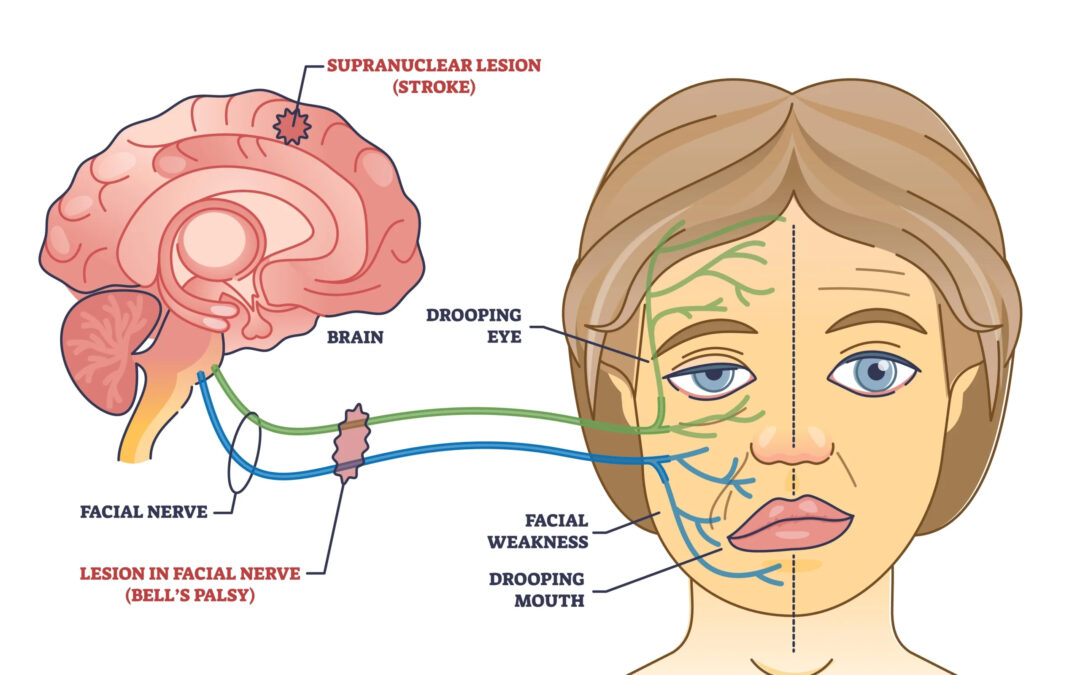
Bell’s Palsy is a neurological condition that affects facial muscles, leading to sudden weakness or paralysis on one side of the face. Named after the Scottish anatomist Sir Charles Bell, who first described it in the 19th century, Bell’s Palsy is a temporary disorder that can cause significant discomfort and challenges for those who experience it. While the exact
cause remains somewhat elusive, advances in medical understanding have shed light on potential triggers and effective treatments, including the use of physiotherapy.
What is Bels Palsy?
Causes and triggers:
The exact cause of Bell’s Palsy is still not definitively understood, but several factors are believed to contribute to its development.
Viral Infections – The most widely accepted theory is that viral infections, particularly the herpes simplex virus type 1 (HSV-1), are a significant trigger. This virus is responsible for cold sores and can lead to inflammation of the facial nerve.
Immune System Response – An abnormal immune response might cause inflammation and swelling around the facial nerve.
Genetic Predisposition – Some individuals may have a genetic predisposition to developing Bell’s Palsy.
Environmental Factors – Environmental factors such as cold weather and stress could potentially trigger the condition in susceptible individuals.
Other Infections – Other viral or bacterial infections, such as Lyme disease, can also lead to facial nerve inflammation and symptoms similar to Bell’s Palsy.
Physiotherapy as a Treatment Approach
Physiotherapy plays a crucial role in the management and recovery of Bell’s Palsy. While the condition often improves on its own within a few weeks to months, physiotherapy interventions can accelerate the healing process and improve overall outcomes. The primary goals of physiotherapy in Bell’s Palsy treatment include –
Facilitating Muscle Re-education:
Physiotherapists use various techniques to stimulate the affected facial muscles and retrain them to move properly. This can involve exercises, massage, and biofeedback techniques.
Preventing Muscle Atrophy: Due to the lack of proper muscle use, atrophy (muscle wasting) can occur. Physiotherapy helps prevent and counteract muscle atrophy by promoting muscle activation and circulation.
Improving Facial Symmetry: Physiotherapists work to restore facial symmetry by focusing on targeted exercises and movements that help balance muscle tone between the affected and unaffected sides of the face.
Enhancing Nerve Function: Techniques like electrical stimulation can be used to stimulate the affected facial nerve and promote its recovery.
Managing Pain and Discomfort: Physiotherapists can incorporate modalities like heat, cold, and manual therapy to alleviate pain and discomfort associated with Bell’s Palsy.
Educating Patients: Patients are educated on self-care techniques and exercises that they can continue at home to support their recovery process.
In Conclusion:
Bell’s Palsy can be a distressing condition, causing facial weakness and impacting various aspects of daily life. Physiotherapy is a valuable treatment approach that aims to accelerate recovery, improve muscle function, and enhance overall facial symmetry. By working closely with physiotherapists, individuals with Bell’s Palsy can achieve better outcomes and regain their confidence in social and personal interactions. As research advances, a more comprehensive understanding of the condition may lead to even more effective treatments in the future. Call our team on 07 3880 1649 or book online today.